AI Governance
DSIT, NIST, ISO 23894, ISO 42001: The Executive Matrix for Choosing an AI Risk Framework
September 2026·5 min

Intelligence for AI Leaders
Four risk-management instruments now claim a seat at the same governance table. Here is what each one actually proves, where their coverage overlaps or runs out, and the evidence a risk committee should demand before accepting any of them as sufficient.
The executive matrix is available as a downloadable PDF in English and Spanish.
GPT‑6 ASTRA • BUSINESS & GOVERNANCE ANALYSIS
Its significance is not that it can generate better answers. It is that frontier AI is becoming capable of navigating applications, creating professional deliverables and executing complex workflows with less human coordination.
For business leaders, this could compress decision cycles, reduce operational friction, scale institutional expertise and enable new operating models. But access to greater capability does not create enterprise readiness.
Complimentary • 5 minutes • Immediate readiness result
No credit card required.

WHY ASTRA MATTERS
ASTRA signals a transition from AI used primarily to generate content toward AI capable of participating in operational work.
The potential business impact includes:
The opportunity is significant. So is the architectural responsibility.
Every organization may eventually access similar frontier intelligence. Competitive advantage will come from how that intelligence is connected to proprietary knowledge, business processes, decision authority, governance and measurable outcomes.
| Capability | Enterprise Requirement | Risk if Missing |
|---|---|---|
| Computer and browser use | Process boundaries and access permissions | Uncontrolled or unauthorized actions |
| Multistep workflows | Operating model and escalation paths | Actions without appropriate oversight |
| Long-context reasoning | Governed institutional context | Decisions based on inappropriate information |
| Professional deliverables | Evidence and validation standards | Polished outputs mistaken for verified conclusions |
| Greater autonomy | Human accountability and intervention authority | Ambiguous responsibility for outcomes |


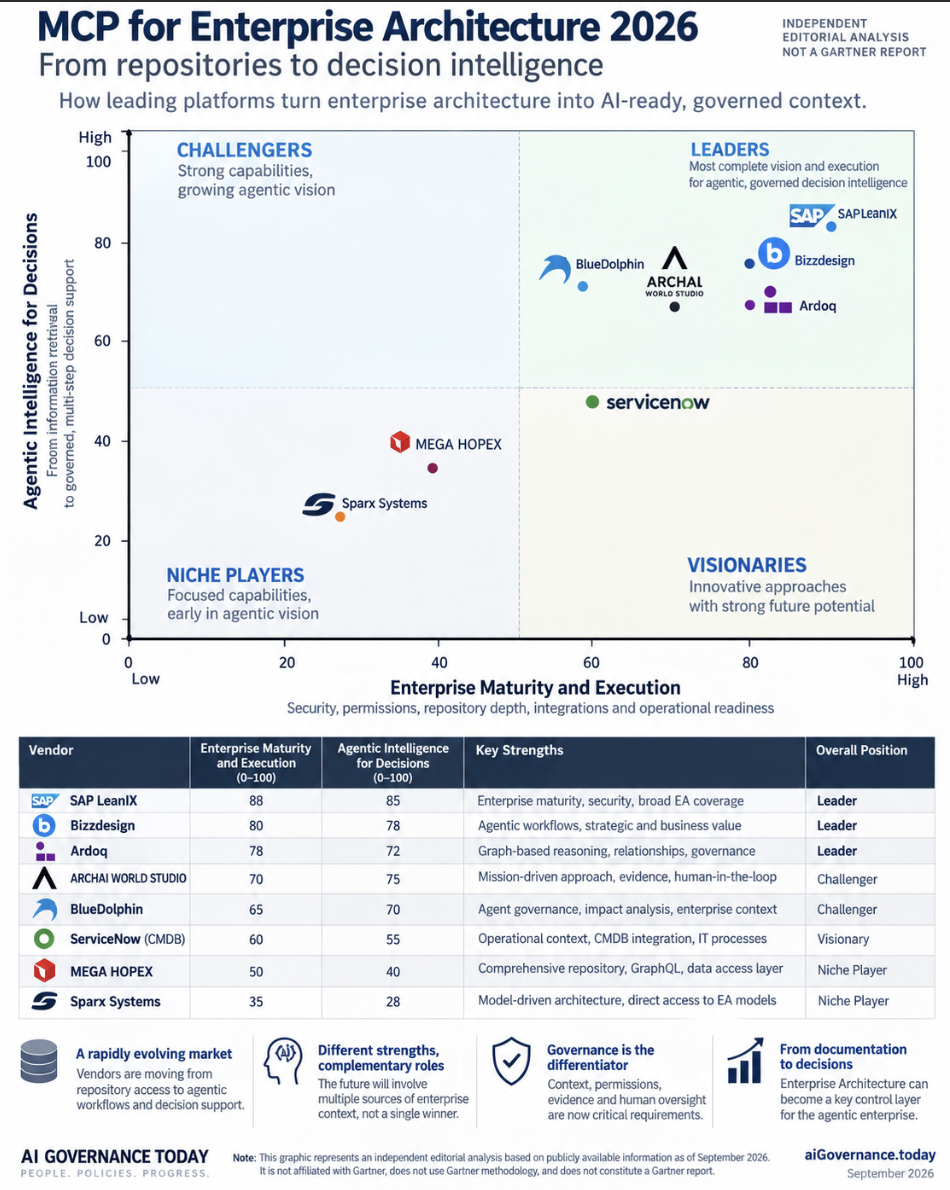
AI Governance Today distinguishes verified facts, analysis, representative scenarios and editorial perspective. We link to primary sources whenever possible and disclose commercial connections to the ARCHAI WORLD™ ecosystem.

Harvard Business Review has published a critical framework for managing AI agents as organizational talent rather than software tools — with structured job descriptions, human oversight, contextual encoding, and performance governance. This article unpacks HBR's guidance, its alignment with ISO 42001, and what enterprises must do in the next 90 days to operationalize it.
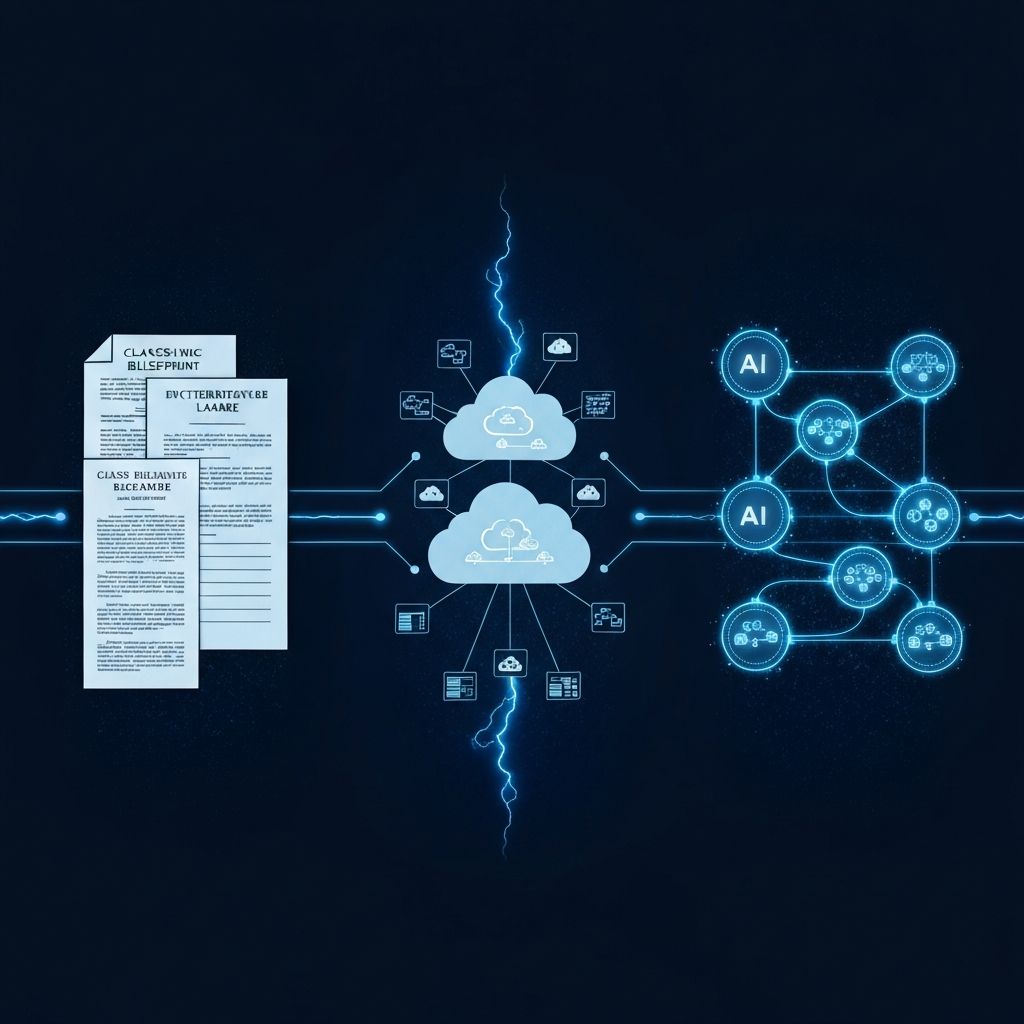
In the same week Jensen Huang declared every SaaS company would become Agentic-as-a-Service, McKinsey was hacked in two hours by an autonomous AI agent. These are not contradictions — they are the same story. This is the 30-year evolution of Enterprise Architecture that explains why, and the precise sequence that reverses the failure mode.

Gartner predicts 40% of agentic AI projects will be cancelled by 2027. The cause is not model failure — it is missing architecture. Leonardo Ramírez presents the five non-negotiable layers that make AI agent deployment survivable.

In an extended interview, Leonardo Ramírez — senior enterprise architect, founder of ARCHAI WORLD™, and Editor-in-Chief of AI Governance Today — shares his perspective on why AI governance has become the defining leadership challenge of this decade.

Latin American companies with EU market exposure face enforcement deadlines that most have not adequately prepared for. Here is the actionable compliance roadmap your legal and technology teams need now.

Autonomous AI agents are forcing enterprise architects to rethink everything from data governance to security perimeters. Here is the architectural blueprint emerging from leading organizations.

ARCHAI WORLD™
Model-independent enterprise intelligence designed to connect AI agents, architecture, governance and executive decision-making. Each one does in minutes what used to take weeks of consulting.
WEEKLY EXECUTIVE INTELLIGENCE
Receive one evidence-based executive briefing each week on frontier AI, governance, enterprise architecture, regulation and intelligent operating models.
No spam. Unsubscribe at any time.

Colombia has approximately 24 months to decide whether it will lead the AI economy in Latin America or follow it for the next three decades. Plan Colombia IA 2030™ presents the strategic architecture for a governed national transformation.
In an extended interview, Leonardo Ramírez — senior enterprise architect, founder of ARCHAI WORLD™, and Editor-in-Chief of AI Governance Today — shares his perspective on why AI governance has become the defining leadership challenge of this decade.

Why "We Don't Build AI" is becoming one of the most dangerous assumptions in business. A European retail organization with 4,500 employees discovered 327 employees using unauthorized AI tools on day one of assessment. Shadow AI, invisible governance gaps, and regulatory exposure are already inside most enterprises.
Latin American companies with EU market exposure face enforcement deadlines that most have not adequately prepared for. Here is the actionable compliance roadmap your legal and technology teams need now.
Four risk-management instruments now claim a seat at the same governance table. Here is what each one actually proves, where their coverage overlaps or runs out, and the evidence a risk committee should demand before accepting any of them as sufficient.
Oct 15, 2026
Global
Organizations certified in the first wave of ISO/IEC 42001 AI management system audits enter their first annual surveillance audit window.
Nov 5, 2026
Virtual
A closed-door executive session on operating models, escalation paths and accountability structures for autonomous AI agents.
Jan 28, 2027
Geneva, Switzerland
Annual gathering of regulators, standards bodies and enterprise leaders shaping cross-border AI governance frameworks.
Have a governance development, research finding, AI incident or consequential event our editorial team should know about?
Submit a Governance SignalAre you an expert available when AI governance news breaks?
Become a Source