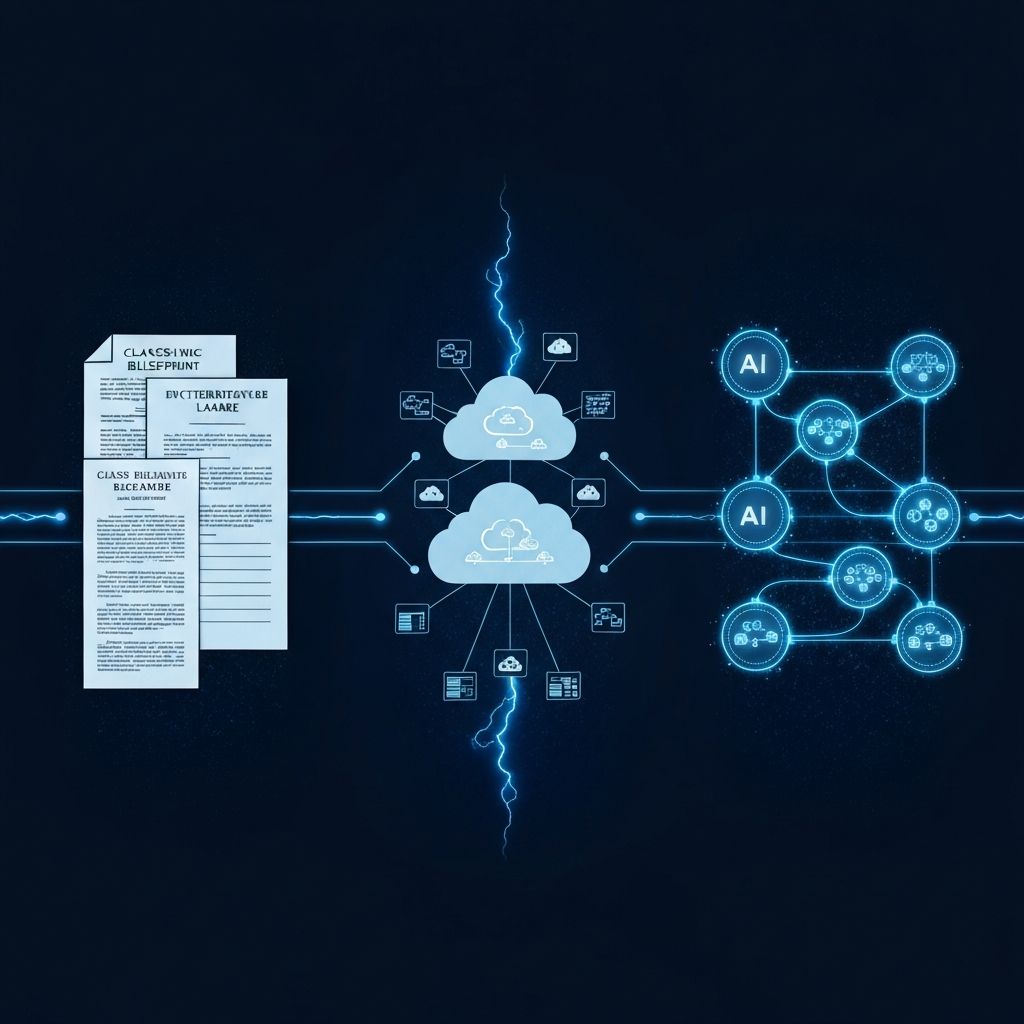
Across Europe, we are seeing a growing number of organizations making the same mistake:
"We don't develop AI. We only use tools from the market."
That belief is rapidly becoming a governance, operational, and regulatory risk.
The reality is that most enterprises are already using artificial intelligence across:
- HR
- Marketing
- Customer service
- Analytics
- Operations
- Productivity platforms
- CRM systems
- Recruitment workflows
- Automation tools
- AI copilots
The problem?
Many leadership teams have little or no visibility into how AI is actually being used inside their organizations.
And under the EU AI Act, invisible AI may become one of the most dangerous forms of exposure.
A Real Scenario We Recently Observed
As part of our AI Governance Signal Intelligence initiatives at ARCHAI WORLD™, we recently worked with a large European retail and e-commerce organization operating across Spain, France, and Germany.
Due to NDA restrictions, we cannot disclose the company's identity.
The company had:
- 4,500 employees
- Millions of customer loyalty profiles
- E-commerce operations
- Physical stores
- AI-powered marketing workflows
- AI-assisted recruitment processes
At the executive level, the organization initially believed:
- "We are not an AI company."
- "We only use standard market tools."
- "We still have time before regulation matters."
They were wrong.
What The AI Signal Intelligence Agents Discovered
On the first day of assessment, the EU AI ACT SIGNAL AGENT detected:
| Finding | Risk Level |
|---|---|
| 327 employees using unauthorized AI tools | High |
| Prompts containing sensitive internal information | Critical |
| Customer data uploaded into public AI systems | Critical |
| AI-generated marketing claims without validation | Medium |
| AI-assisted candidate prioritization in HR | High-Risk (EU AI Act) |
| Automated customer service responses without traceability | Medium |
| Operational decisions influenced by AI without formal oversight | High |
None of these activities had been fully mapped, documented, governed, or classified.
Leadership believed AI usage inside the company was "limited."
The signals showed something very different.
The Critical Discovery: HR + Recruitment AI
One of the most important findings came from recruitment workflows.
The system classified part of the HR process as:
POTENTIAL HIGH-RISK AI USE CASE
Why?
Because the AI system:
- Influenced employment opportunities
- Affected candidate prioritization
- Lacked documented human oversight
- Had no auditable criteria
- Lacked formal transparency mechanisms
The organization originally believed the system was simply "helping recruiters work faster."
However, once mapped against EU AI Act exposure scenarios, the risk profile changed dramatically.
This became a turning point for leadership.
Another Hidden Risk: AI-Driven Customer Segmentation
The marketing department was using AI to:
- Segment customers
- Prioritize promotions
- Personalize pricing
- Automate engagement strategies
Again, the organization had limited visibility into:
- How the models functioned
- What data was being used
- Who owned governance
- Which vendors were involved
- Whether explainability existed
The dashboard revealed:
- Low AI governance maturity
- Weak human oversight coverage
- Low AI literacy readiness
- Elevated data exposure risk
This was no longer a theoretical compliance conversation.
It was operational risk management.
The Moment Leadership Finally Understood
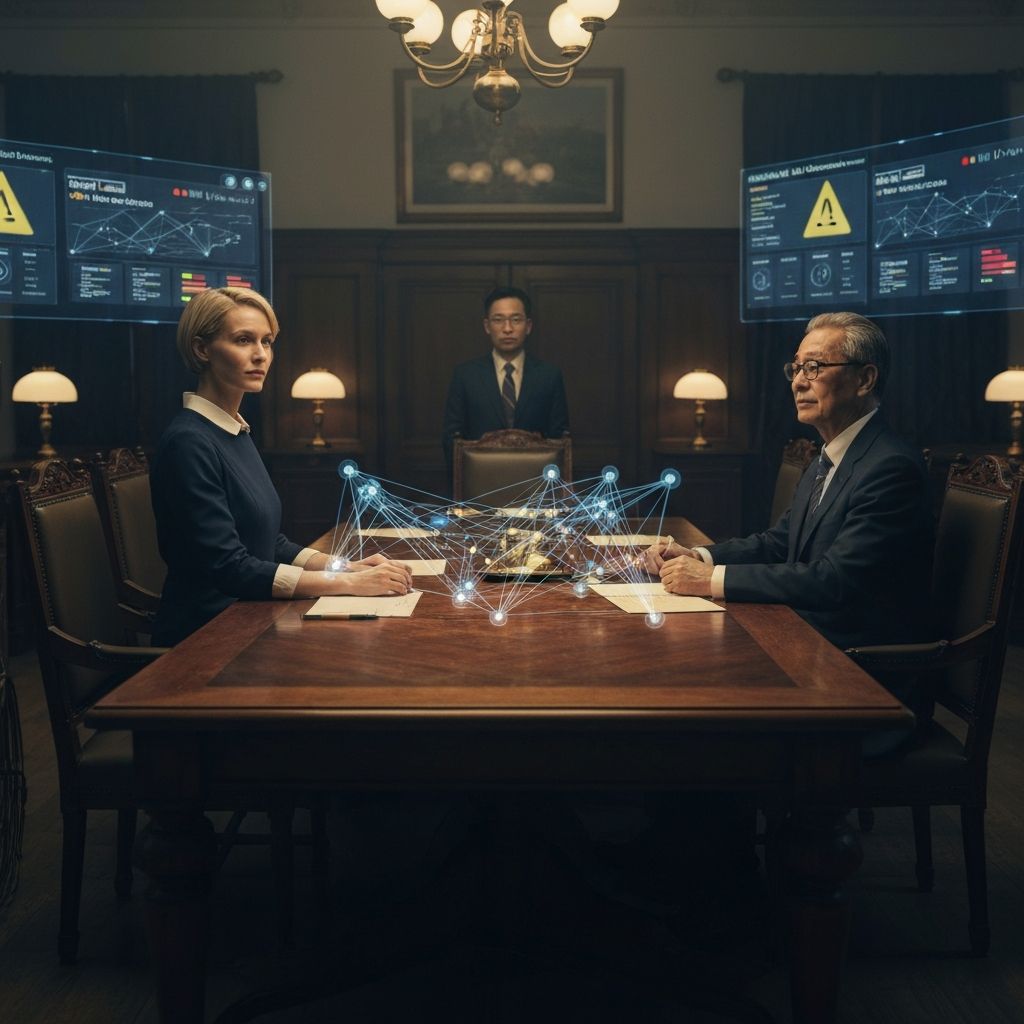
During a simulated EU AI Act Crisis Lab scenario, executives faced a realistic regulatory escalation exercise.
The simulation required the company to provide:
- Evidence of human oversight
- AI inventory documentation
- Risk classifications
- AI literacy evidence
- Governance ownership
- Decision traceability
- AI usage accountability
The organization quickly realized it did not have:
- A centralized AI inventory
- Governance ownership
- AI policies
- AI literacy evidence
- Governance structures
- Operational controls
The CEO summarized the realization clearly:
"We thought this was just compliance. Now we understand this is operational and strategic risk."
What The Company Did Immediately
Within the first weeks, the organization launched:
- An AI Governance Task Force
- AI inventory initiatives
- Shadow AI discovery programs
- AI usage policies
- Human oversight frameworks
- AI literacy programs
- Executive AI risk dashboards
Soon after, they established:
- An AI Governance Office
- An ISO 42001 alignment initiative
- A board-level AI risk committee
- AI vendor governance frameworks
The transformation was immediate.
The Most Important Lesson
The problem was never using AI.
The problem was not knowing how AI was already being used.
This is the reality many organizations are now facing.
The Companies Most Exposed Today
The organizations currently facing the highest levels of hidden AI exposure often include:
- Retail
- Banking
- Insurance
- Healthcare
- HR-intensive organizations
- Telecom
- Government
- Education
- Customer-service-heavy industries
Why?
Because AI is already deeply embedded into workflows, decisions, analytics, and customer interactions.
Often without centralized visibility.
AI Governance Is Entering A New Era
We believe the market is moving beyond traditional consulting.
Organizations no longer need static PowerPoints explaining that AI exists.
They need:
- Visibility
- Signal detection
- Governance intelligence
- Operational readiness
- Real-time risk awareness
This is why we are developing AI Governance Signal Intelligence systems:
- Shadow AI Detection
- Executive Exposure Dashboards
- AI Governance Command Centers
- AI Crisis Labs
- ISO 42001 readiness frameworks
- AI Governance Agents
Because the companies that survive the AI era will not be the ones with more AI.
They will be the ones that can see their AI.
Final Thought
Most organizations do not need more AI.
They need visibility into the AI they already have.
And many are already later than they think.
Leonardo Ramírez is the Founder & Chief Architect of ARCHAI WORLD™. He has 30 years of enterprise architecture experience across banking, healthcare, logistics, technology, and government — three continents, 45+ countries. 500+ transformations delivered. 5,000+ enterprise architects trained. Creator of the Agentic EA Framework. ISO 42001 AI Governance practitioner. TOGAF-certified. Anthropic Partner Network.
Related Coverage
- A 30-Year Enterprise Architect Built the First Governed AI Agent System for the 2026 Global Football Tournament
- The Gauntlet Begins: One Architect, Ten Agents, and a $47 Million Proof
- The Trillion-Dollar Governance Gauntlet: Leonardo Ramírez's 30-Day Public Challenge to Build Enterprise AI Governance