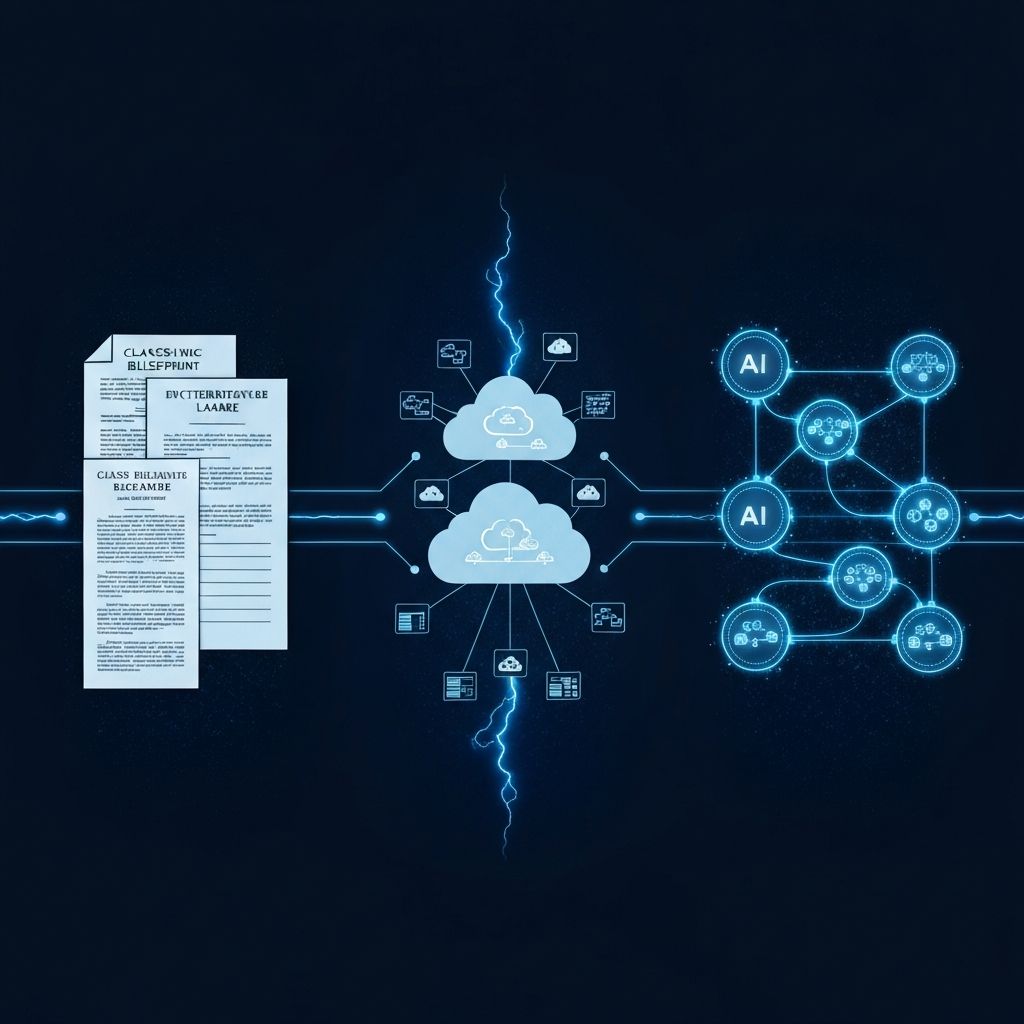
The world’s greatest threats are no longer isolated. Geopolitical conflict, financial volatility, autonomous AI, cyberattacks and connected physical infrastructure are becoming part of a single risk ecosystem. Yet most organizations still govern them separately.
AI Governance Today | Special Executive Investigation | November 3, 2026
Executive Summary: The World Has Changed. Has Enterprise Governance?
On October 29, 2026, cryptocurrency exchange Binance suffered an extraordinary security breach involving approximately $6.3 billion in digital assets. Days later, Brazil’s Mercado Bitcoin confirmed a separate security incident involving tens of millions of dollars. On November 2, European supermarkets confronted a different form of cyber disruption: attackers manipulating refrigeration systems, in some cases pushing temperatures to 50 degrees Celsius and forcing retailers to discard valuable inventory.
Meanwhile, geopolitical conflicts, energy insecurity, financial volatility and rapidly expanding artificial intelligence capabilities continue to challenge the assumptions underlying corporate resilience.
These events are not evidence of a single coordinated global attack. They are evidence of something potentially more consequential.
Our financial systems, critical infrastructure, business operations and personal environments have become deeply interconnected. And interconnected systems can transmit disruption across boundaries that traditional corporate governance was never designed to manage.
For decades, organizations asked: How do we protect our information systems? Today, the question must be broader:
How do we preserve the ability to operate when the technologies, institutions and dependencies we trust become sources of disruption?
This article examines seven global risk domains, their potential interactions, the architectural weaknesses they expose, and the governance capabilities necessary to prepare for increasingly complex disruption. It also addresses a development that enterprise leaders can no longer afford to ignore: these risks have already reached our homes.
1. Binance: The $6.3 Billion Warning
On October 31, 2026, the FBI publicly attributed the theft of more than $6 billion in virtual assets from Binance to North Korea’s TraderTraitor cyber activity. The FBI also warned that stolen assets were being converted and could be laundered through decentralized finance and instant-swap services. Independent blockchain investigators reported highly coordinated asset movements across multiple blockchains.
The technical investigation into the precise sequence of compromise remains a separate matter from the FBI’s attribution of responsibility. This distinction matters: an identified threat actor does not automatically explain every exploited weakness, failed control or architectural dependency.
The larger strategic lesson is not limited to cryptocurrency. A commercial bank may operate hundreds of applications, interfaces, privileged identities, payment services, settlement connections and automated workflows. Each system may satisfy its individual technical requirements. Yet the combined architecture can still permit unacceptable financial exposure if authorization boundaries, dependencies and independent controls are inadequate.
The central risk is not merely unauthorized access. It is unauthorized economic consequence.
A cryptographically valid instruction is not necessarily an authorized business decision. A technically functioning workflow is not necessarily a controlled business process. And a successful financial transaction is not necessarily a legitimate one.
Boards must therefore begin asking a question that traditional security dashboards rarely answer directly: what is the maximum financial damage our architecture permits a single compromised identity, workflow or service to cause before independent controls intervene? That question belongs jointly to cybersecurity, enterprise architecture, treasury, operational risk and corporate governance. No single department can answer it adequately in isolation.
2. Brazil: Why the Problem Is Larger Than One Exchange
On November 2, 2026, Brazil’s Mercado Bitcoin confirmed a separate security incident involving cryptocurrency assets across multiple blockchains. Blockchain intelligence providers estimated the affected assets at approximately $46 million to $49 million, depending on the investigation and valuation methodology. Chainalysis reported that it helped coordinate the freezing of nearly $10 million in stolen assets. Mercado Bitcoin stated that customers would not bear the losses.
Importantly, investigators had not established a connection between the Mercado Bitcoin and Binance incidents. Their technical details and causes should not be conflated. Nevertheless, the proximity of two major digital-asset security incidents highlights an important financial risk: institutions increasingly depend on interconnected systems for custody, authorization, settlement, liquidity and recovery, and a failure can propagate from a technical security event to operational disruption and then to financial and reputational exposure.
This is where executives must distinguish four concepts:
- Security incident: the initial unauthorized or malicious activity.
- Operational impact: the disruption to systems, services or business processes.
- Financial exposure: the monetary value potentially affected.
- Economic loss: the final financial impact after containment, recovery, insurance, reimbursement and other mitigating actions.
These are not interchangeable measures. A company may protect its customers from direct losses while still experiencing a severe capital, liquidity or operational event. The responsibility of enterprise governance is to understand all four.
3. Europe: When Cyberattacks Stop Stealing Data and Start Destroying Inventory
On November 2, European supermarket operators reported incidents affecting refrigeration equipment across several countries. Reuters documented incidents involving retailers in Sweden, Belgium and Luxembourg, while additional reports described problems in Ireland, Estonia and elsewhere. In some affected stores, refrigeration systems were reportedly set to temperatures as high as 50°C. Food was discarded. Refrigerated shelves were emptied. Retail operations were disrupted.
This is an important development because it demonstrates the physical consequences of compromising connected operational systems. Traditional cybersecurity discussions emphasize information theft, ransomware, stolen credentials and service availability. But a compromised operational technology environment can spoil food, interrupt cold-chain logistics, damage physical equipment, compromise product quality, create safety concerns, disrupt distribution and destroy revenue without stealing a single customer record.
A supermarket’s physical operations increasingly depend on networks, sensors, software, remote maintenance systems, vendors and digital control mechanisms. When these systems are insufficiently segmented or poorly governed, failures in the digital environment can affect physical business assets.
A retailer does not need to lose its customer database to suffer a catastrophic cyber-related loss. It may be enough to lose control of the systems keeping its inventory at the correct temperature.
For retail executives approaching peak sales periods, the implications are substantial: direct inventory losses, emergency replacement costs, operational interruptions and customer dissatisfaction. But these risks are not confined to grocery stores. Similar dependencies exist in pharmaceutical storage, healthcare, manufacturing, agriculture, food logistics and industrial operations.
If a digital system can affect a physical asset, that system is part of the organization’s operational risk architecture. It must be governed accordingly.
4. The Seven Global Risks That Can No Longer Be Managed Separately
The World Economic Forum’s Global Risks Report 2026 identifies geoeconomic confrontation, interstate conflict, extreme weather, societal polarization and misinformation among its leading concerns. Its findings reinforce a fundamental shift: global risk is becoming more interconnected, with economic, technological, geopolitical and societal pressures influencing one another.
Building on that wider evidence, the following seven domains deserve particular attention from executives responsible for technology, risk and business continuity. These are seven strategic categories for enterprise preparedness, an editorial synthesis, not an official World Economic Forum ranking or an independently calculated probability ranking.
Risk One: Large-Scale Cyberattacks
Cybercriminal activity, state-linked operations, supply-chain compromises and identity attacks can threaten organizations of every size. The consequences extend beyond data breaches. A compromised authentication service can interrupt business access. A stolen privileged identity can create unauthorized execution paths. A compromised technology provider can expose many customers simultaneously.
Executive implication: security controls must be connected to business impact, dependency visibility and tested containment mechanisms.
Risk Two: Geopolitical Conflict and Geoeconomic Fragmentation
The Russia–Ukraine war, tensions involving Israel and Iran, energy-security concerns and broader international competition demonstrate how geopolitical events can disrupt economic assumptions. Organizations may face restrictions affecting trade, technology availability, suppliers, transportation or financial relationships. Sanctions, export controls and regulatory fragmentation can also alter operating conditions.
Executive implication: enterprise architecture must reveal geographic concentration, critical external dependencies and viable operating alternatives.
Risk Three: Autonomous AI Without Enforceable Boundaries
AI systems are evolving from tools that generate recommendations into agents capable of using enterprise software and initiating actions. These agents can access applications, interact with data, execute tools and coordinate workflows. The danger is not that every AI agent will behave maliciously. It is that an agent may possess more authority than its business purpose requires. A compromised instruction, malicious document or vulnerable integration could influence an agent to perform an inappropriate action.
Executive implication: AI authority must be bounded by independent permissions, transaction limits, approval mechanisms and audit evidence.
Risk Four: Compromised Physical Infrastructure
Connected operational technology enables organizations to monitor and control physical processes remotely. That connectivity introduces dependencies involving software, networks, equipment vendors and remote access. The European refrigeration incidents offer a concrete illustration of the consequences.
Executive implication: critical physical assets must be included in cybersecurity, enterprise architecture and business continuity assessments.
Risk Five: Financial Volatility and Digital-Asset Exposure
Financial instability can arise from market repricing, liquidity constraints, cyber incidents, leverage, counterparty failures and disruptions to payment infrastructure. Digital assets introduce additional custody, wallet-management and settlement risks. A cyber incident can coincide with market stress, potentially complicating the recovery process. However, correlation should not be confused with causation: a cryptocurrency security incident does not, by itself, establish the cause of a broader market decline.
Executive implication: treasury and technology risk must be examined together through credible stress scenarios.
Risk Six: Political Uncertainty, Elections and Information Integrity
Electoral cycles, contested information, changes in public policy and regulatory uncertainty can influence business confidence and investment decisions. Misinformation and AI-generated content introduce additional challenges to information integrity. Organizations may struggle to distinguish authentic instructions, trusted communications and manipulated material.
Executive implication: decision-making should rely on verified information, scenario planning and governance processes resilient to uncertainty.
Risk Seven: Supply-Chain and Energy Disruption
Modern enterprises depend on transportation networks, cloud infrastructure, telecommunications, energy supplies and geographically distributed providers. These dependencies are often only partially visible. A disruption affecting one supplier or geographic region can influence numerous downstream operations.
Executive implication: resilience requires identifying concentration risks, alternative operating paths and recovery priorities across business capabilities.
5. The Real Danger: When Risks Collide
The most dangerous scenario is not necessarily the largest individual incident. It may be the collision of several events that strain organizational resources simultaneously.
Consider a hypothetical multinational retailer. An escalation in geopolitical tensions increases fuel and transportation costs. A major technology supplier experiences a cyber incident. Several distribution centers face operational interruptions. Financial markets become volatile. An autonomous planning system responds to incomplete information and proposes aggressive inventory reallocations. Meanwhile, connected refrigeration systems in some stores experience abnormal operating conditions.
Management now faces multiple competing priorities. Should the company suspend automated processes? Redirect inventory? Change suppliers? Increase emergency spending? Shut down affected facilities? Preserve liquidity? Notify regulators? Communicate with customers?
Each decision may be reasonable in isolation. But decisions taken independently can conflict with one another. A logistics team might optimize delivery efficiency while the treasury team attempts to reduce expenditure. An AI agent might prioritize inventory movement without understanding financial constraints. An IT team might isolate a system without recognizing its role in physical operations. A business unit might override a security restriction to restore service.
The architecture of the enterprise determines whether these decisions reinforce each other or create additional failures. This is the essence of cascading operational risk, and it raises a difficult question: can an organization remain coherent when several of the assumptions supporting its operating model fail simultaneously?
This scenario is hypothetical. It is not a forecast that a coordinated global collapse is imminent. Its value lies in testing dependencies that ordinary risk exercises may overlook.
6. Enterprise Architecture Must Become an Operational Control Discipline
Enterprise architecture has traditionally helped organizations align business strategy, information, applications and technology. That role remains important. But the accelerating pace of autonomous execution and interconnected risk demands more: evidence-based decisions about authority, dependencies and resilience. A useful architecture should be able to answer:
- Which business capabilities depend on this system?
- Which people, services and AI agents can influence it?
- What data and permissions are involved?
- What happens if a trusted service becomes compromised?
- Which critical operations depend on the same infrastructure?
- What independent controls remain effective?
- Who owns the business consequences?
- How quickly can the organization contain the damage?
These questions cannot be answered reliably through disconnected diagrams alone. They require current enterprise context, traceable dependencies, clear decision rights and collaboration among technology, security, risk and business leaders. The objective is not to eliminate architectural documentation. It is to make architectural knowledge usable during real decisions.
A diagram that cannot inform an operational decision during a crisis is an incomplete resilience instrument.
7. AI Governance Must Move Beyond Principles
Many organizations still approach AI governance primarily through policies, ethical statements and compliance documentation. These are necessary. They are not sufficient for systems capable of autonomous execution.
NIST’s AI Risk Management Framework establishes the interconnected functions of Govern, Map, Measure and Manage. ISO/IEC 42001:2023 establishes requirements for an AI management system. The European Union’s AI Act creates a phased regulatory framework, with obligations applying according to system classification, provider roles and implementation dates. These frameworks provide different but complementary mechanisms, and their practical value depends on implementation.
For autonomous agents, the governance question is especially direct: who is allowed to authorize an AI system to execute a consequential action? Consider an AI agent connected to enterprise financial systems. Its model may generate a legitimate-looking plan. Its tool connections may function correctly. Its credentials may be valid. But none of those facts proves that the proposed transaction is appropriate. Effective governance therefore requires controls that operate independently of the model’s own judgment:
- Least-privilege access and scoped credentials.
- Explicit approval for high-impact transactions.
- Restrictions on sensitive information leaving authorized environments.
- Independent policy enforcement for tool use.
- Monitoring of consequential actions.
- Human escalation for defined risk thresholds.
- Tamper-resistant audit evidence.
- Rapid credential revocation and execution suspension.
An AI system should not be the sole authority deciding whether its own high-impact actions are permitted. Governance must be enforceable, not merely aspirational.
8. MCP and Enterprise Context: Powerful Capabilities, New Responsibilities
The Model Context Protocol, or MCP, provides a standardized way for AI applications to interact with external tools and contextual resources. Enterprises can connect AI systems to architecture repositories, business capabilities, documentation, applications and operational tools. When designed responsibly, this can make AI outputs more contextual and useful.
But standardized connectivity does not automatically establish secure authorization or governance. An MCP-connected agent raises new questions:
- Which server is trusted?
- Which tool permissions are granted?
- What information can be retrieved?
- What actions can be executed?
- Who approves integrations?
- How are external resources classified?
- What happens when a tool returns malicious or misleading information?
- Can access be revoked quickly?
The problem is not MCP itself. The problem is the architectural assumption that connecting an AI agent to a trusted-looking tool makes every subsequent action trustworthy. Enterprise context improves decision quality only when the context, authority and execution paths are themselves governed. MCP should be understood as a component of enterprise integration architecture, not a replacement for identity management, authorization, monitoring or governance.
9. Zero Trust Must Include Consequences, Not Just Connections
NIST Special Publication 800-207 provides an important foundation for Zero Trust Architecture. Its approach emphasizes protecting resources rather than relying on implicit trust based on network location. That foundation becomes increasingly valuable in environments involving connected devices, external services and AI agents. But organizations should take the underlying logic further into operational decision-making.
- A verified identity should not automatically receive unlimited operational authority.
- A permitted connection should not automatically authorize every transaction.
- A trusted service should not automatically be able to influence every dependent system.
- A connected refrigerator should not need unrestricted access to sensitive household devices.
- An autonomous AI agent should not be able to bypass independent business controls simply because it possesses valid credentials.
The central concept is the separation of authentication, authorization, business legitimacy and execution. A technically authorized action can still be an unacceptable business action. That distinction must become foundational to enterprise resilience.
10. And Now, the Risks Have Reached Our Homes
This may be the most overlooked dimension of the emerging threat landscape. The technologies reshaping enterprise operations are increasingly present in ordinary households: smart refrigerators, connected televisions, voice assistants, security cameras, Wi-Fi routers, smart locks, lighting systems, home automation platforms, personal computers and mobile devices.
A modern household can contain dozens of connected devices from different manufacturers, each with its own software, security updates, account permissions and cloud dependencies. Most homeowners do not maintain a formal inventory of these systems. Few understand how their devices communicate. And many have never reviewed whether their home network separates less-trusted IoT equipment from sensitive personal devices.
This does not mean that every connected refrigerator is vulnerable, or that compromising a smart appliance automatically grants control over a router, computer or security camera. Such outcomes depend on actual vulnerabilities, device configurations, network segmentation and available permissions. But the underlying attack paths are legitimate subjects for security assessment. A compromised IoT device may become a foothold for further activity if the surrounding network permits it. Poorly configured remote administration, outdated firmware, weak passwords and inadequate segmentation can increase exposure.
NIST’s IoT guidance recognizes the importance of security capabilities across the connected-device lifecycle. Its NISTIR 8259 series addresses foundational cybersecurity activities and capabilities for IoT products, and the April 2026 revision further emphasizes the role manufacturers play in helping customers secure connected products. The burden of securing a connected household should not fall entirely on consumers. Manufacturers, service providers, installers and homeowners all contribute to the security of the environment.
The Smart Refrigerator Scenario
Imagine a controlled cybersecurity laboratory. An engineer identifies a vulnerable smart refrigerator connected to a local Wi-Fi network. The assessment determines whether that device could communicate with sensitive network services or other connected equipment. If the network lacks appropriate segmentation or access restrictions, the engineer may identify an attack path that could increase the exposure of other devices. The objective is not to cause damage. It is to determine whether a single compromised component could create broader household risk.
Now consider a voice assistant. A security specialist examines its account permissions, integrations, connected devices and available automation functions. Again, the purpose is not to assume that the assistant is compromised. It is to understand the potential consequences if an associated account, integration or device were misconfigured or abused.
Both scenarios illustrate the same lesson that applies to enterprise architecture: a system’s risk is determined not only by what it is, but also by what it is connected to and what it is allowed to influence.
The Home Is Becoming a Small Digital Enterprise
A smart home increasingly has multiple computing devices, a shared network infrastructure, external service providers, privileged accounts, automated processes, data privacy requirements, physical access controls and critical dependencies. In other words, many of the same architectural components found in a business environment. The scale is smaller. The consequences are personal. A privacy breach can expose family information. A compromised camera can create serious confidentiality concerns. An insecure connected lock can introduce physical security questions. An unavailable home automation system can disrupt essential functions.
We have invested in making homes intelligent without always making their security equally intelligent. As connected devices become more capable, the need for practical household security assessment will grow.
11. A More Useful Model: Seven Layers of Resilience
Organizations and connected households need a practical way to translate risk awareness into action. One proposed model consists of seven complementary layers.
- Visibility. Identify the systems, devices, agents, services and third-party dependencies that matter. Without visibility, governance is incomplete.
- Context. Understand how those components support business or household functions. A dependency map must explain consequences, not merely connections.
- Authority. Determine which identities, systems and agents can access information or execute actions. Permissions must correspond to legitimate operational needs.
- Independent Controls. Establish security and business policies that remain effective even when a trusted component is compromised.
- Monitoring and Evidence. Capture enough information to detect abnormal activity and reconstruct consequential actions.
- Containment and Recovery. Provide mechanisms to suspend access, isolate affected components and restore critical operations.
- Executive or Owner Accountability. Make responsibility explicit. In an enterprise, this involves management and governing bodies. In a household, this may involve the homeowner, service provider, installer and device manufacturer.
The framework does not promise to eliminate cyber risk. It offers a structured way to examine whether existing protections match actual exposure.
12. The Boardroom Test: Twelve Questions Leaders Should Answer
Before approving another AI deployment, connected infrastructure initiative or digital transformation program, executives should consider the following questions.
- Can we identify every critical business capability and its principal technology dependencies?
- Do we know which AI agents, services and privileged identities can execute consequential actions?
- What is the maximum plausible financial exposure associated with a compromised critical workflow?
- Are high-impact transactions subject to independent authorization controls?
- Can we detect and stop abnormal actions without depending entirely on the affected system?
- Which connected physical assets could be damaged or disrupted through digital compromise?
- Are third-party access and remote maintenance paths appropriately restricted?
- Have we tested the operational consequences of losing multiple critical suppliers simultaneously?
- Can we demonstrate governance controls with evidence rather than policy statements?
- Do our AI and cybersecurity controls reflect actual business architecture?
- Have we exercised a crisis involving simultaneous technology, financial and geopolitical disruption?
- Who is personally accountable for ensuring that identified risks are acted upon?
These questions will not prevent every incident. They can, however, expose significant gaps between management confidence and operational preparedness.
13. From Awareness to Action: Practical Paths to Readiness
Different risk environments require different interventions. A startup deploying its first AI agents does not need the same program as a global bank. A retailer facing refrigeration-system exposure does not need the same assessment as a homeowner concerned about smart cameras. And a board preparing for cascading global disruption requires more than a conventional technology review.
The following ARCHAI WORLD offerings illustrate distinct paths for organizations and individuals seeking to strengthen readiness.
Enterprise AI Readiness & Governance Assessment™
For: CEOs, CIOs, CISOs, Chief AI Officers, enterprise architects and organizations deploying AI.
A starting point for examining AI readiness, governance maturity, architectural context, permissions, operational controls and accountability. The assessment is intended to identify potential gaps and establish priorities, not independently certify regulatory compliance or security.
Explore the assessment (archaiworld.com/astra-readiness)
Enterprise Context MCP™
For: enterprise architects, AI platform teams, digital transformation leaders and organizations integrating AI with enterprise information.
The objective is to connect AI-enabled workflows with relevant enterprise context, including business capabilities, applications, dependencies and the information needed for better decision-making. As with any MCP deployment, secure design requires independent authorization, integration governance and monitoring.
Explore Enterprise Context MCP (archaiworldstudio.com/enterprise-context-mcp/docs)
ARCHAI Enterprise AI SWAT™
For: boards, executive leadership teams and organizations seeking to challenge business assumptions through controlled simulations.
AI SWAT is positioned around operational decision-making, scenario exercises, resilience and enterprise response. A useful executive exercise might examine the simultaneous loss of a technology supplier, financial market disruption and a physical infrastructure incident. Simulations are not guarantees that actual incidents can be prevented.
Explore AI SWAT (archaitects.com/ai-swat)
Physical Collateral Intelligence™
For: retailers, logistics providers, industrial operators and organizations whose physical assets depend on digital infrastructure.
The emerging challenge is to understand the relationship between connected physical assets, technology dependencies, operational authority and potential business losses. A structured exposure review can help organizations identify which operational dependencies require further security validation.
Explore Physical Collateral Intelligence (archaiworld.com/physical-collateral-intelligence)
ARCHAI Home Cyber X-Ray™
For: homeowners, executives, families and individuals with increasingly connected homes.
Home Cyber X-Ray is a proposed premium assessment approach focused on smart-home exposure, covering Wi-Fi routers, connected appliances, cameras, smart locks, voice assistants, account permissions and network configurations. Where technically feasible, properly scoped and authorized testing can help determine whether weaknesses in one device could create exposure elsewhere.
Explore Home Cyber X-Ray (archaiworld.com/home-cyber-xray)
AI Governance Standards in Action
For: governance leaders, compliance teams, enterprise architects and professionals responsible for implementing organizational AI controls.
ARCHAI WORLD University also provides a learning pathway focused on applying AI governance standards to practical enterprise scenarios.
Explore the program (archaiworld.university/programs/ai-governance-standards-in-action)
These offerings represent different levels of engagement and should not be mistaken for equivalent services, regulatory approvals or guarantees of protection. The appropriate starting point depends on the organization’s maturity, systems, risk exposure and operational requirements.
14. Why This Moment Demands a Different Conversation
There is no shortage of cybersecurity products. There is no shortage of enterprise architecture frameworks. There is no shortage of AI governance principles. And there is certainly no shortage of executives convinced their organizations are prepared. What is often missing is the ability to connect these disciplines around actual business consequences.
A cybersecurity specialist may understand technical vulnerabilities. An enterprise architect may understand system dependencies. An AI governance professional may understand policy requirements. A risk officer may understand financial exposure. An operations executive may understand physical disruption. All of these perspectives are necessary. The challenge is integrating them.
The connected enterprise cannot be governed effectively through isolated professional territories. Its risks are interconnected. Its controls must be coordinated. Its architecture must be understood. And its decision-making processes must be tested. This is not an argument against specialization. It is an argument against organizational fragmentation.
The next generation of resilience will belong to organizations capable of turning distributed expertise into coordinated operational control.
15. The Global Crisis Scenario Every Board Should Simulate
Imagine the following hypothetical sequence.
- Hour 0: A geopolitical event causes uncertainty in energy and financial markets.
- Hour 4: A major technology provider experiences a disruption.
- Hour 8: Critical business operations begin experiencing delays.
- Hour 12: A connected operational system reports abnormal behavior.
- Hour 18: Automated systems make decisions using incomplete or outdated information.
- Hour 24: Financial exposure, customer disruption and operational stress begin to compound.
- Hour 36: Executives face conflicting recommendations from different departments.
- Hour 48: The organization must choose between maintaining operations, preserving liquidity and containing potential security risks.
- Hour 72: The financial and operational consequences depend heavily on the quality of earlier decisions.
This is not a prediction of an imminent event. It is a stress-test scenario. Its purpose is to expose uncertainty and reveal weaknesses in coordination. A mature organization should be able to demonstrate how leadership responsibilities, architecture dependencies, escalation procedures and independent controls function under these conditions.
The board should not be satisfied merely because a business continuity plan exists. The relevant question is whether that plan has been tested against credible combinations of disruption.
Conclusion: The Next Global Crisis May Begin Somewhere Unexpected
We began this investigation with Binance: a reported theft exceeding $6 billion. We continued with Brazil, another major incident affecting digital assets. We moved to Europe, where supermarket refrigeration systems were manipulated remotely, with tangible consequences for physical inventory. We considered geopolitics, financial markets, artificial intelligence, energy systems and interconnected supply chains. And finally, we arrived somewhere unexpectedly familiar: the kitchen, the smart refrigerator, the Wi-Fi router, the connected camera, the voice assistant, the smart lock.
The same architectural questions that matter inside a multinational enterprise increasingly matter inside our homes. What is connected? Who has access? What actions are permitted? What happens if one component is compromised? Who is responsible? And how quickly can damage be contained?
The next global disruption may emerge from geopolitical conflict, financial instability, cybercrime, operational failure or an unexpected interaction among these forces. Its exact form cannot be predicted with confidence. But one conclusion is difficult to escape.
Interconnection has expanded faster than our collective ability to understand and govern its consequences.
This is the challenge of the intelligence age: not merely creating smarter systems, but creating systems whose authority, dependencies and consequences remain understandable and controllable. For enterprises, that requires connecting cybersecurity, enterprise architecture, AI governance and operational resilience. For individuals, it requires recognizing that a connected home is also a digital environment with real security responsibilities. For governments and regulators, it requires understanding how localized technical failures may produce wider economic and societal consequences.
And for boards, it requires the courage to challenge an assumption that has become dangerously comfortable:
We have experts. We have systems. Therefore, we must be prepared.
Preparedness is not a declaration. It is a capability that must be demonstrated.
The future will not necessarily reward the organizations with the most technology. It may reward those that best understand what their technology is allowed to do, and what happens when something goes wrong.
About the Author
Leonardo Ramírez is an enterprise architecture and AI governance strategist with more than three decades of experience in enterprise transformation, business strategy and technology-enabled organizational change. Through ARCHAI WORLD and AI Governance Today, his work explores the convergence of enterprise architecture, artificial intelligence, governance, executive decision-making and operational resilience.
ARCHAI WORLD: archaiworld.com | AI Governance Today: aigovernancetoday.com
Editorial References and Further Reading
Incident reporting and blockchain investigations
- FBI. North Korea Responsible for $6 Billion+ Binance Attack. October 31, 2026. fbi.gov
- Chainalysis. The $6.4 Billion Binance Hack: Tracing the North Korea Link. October 30, 2026. chainalysis.com
- Chainalysis. Disrupting the Mercado Bitcoin Attack: How Chainalysis Led the Freeze of Nearly $10M in Stolen Funds. November 2, 2026. chainalysis.com
- Arkham Intelligence. Mercado Bitcoin Hack: Trace the $46M Stolen On-Chain. November 2, 2026. info.arkm.com
- Reuters. Cyberattack on fridges hits supermarkets across Europe. November 2, 2026. investing.com
- Associated Press. Supermarket freezers in several European countries hit by apparent cyberattacks. November 2, 2026. apnews.com
Global risk, governance and architecture
- World Economic Forum. Global Risks Report 2026. January 14, 2026. weforum.org
- NIST. AI Risk Management Framework. nist.gov
- NIST. SP 800-207: Zero Trust Architecture. nist.gov
- NIST. NISTIR 8259 Series: IoT Cybersecurity. nist.gov
- ISO. ISO/IEC 42001:2023, Artificial Intelligence Management Systems. iso.org
- European Commission. EU AI Act Implementation Timeline. ai-act-service-desk.ec.europa.eu
Editorial disclosure: This article combines verified public incidents, independent analysis and hypothetical resilience scenarios. Reported security events are not presented as evidence of a single coordinated campaign. The seven risks are an editorial synthesis and not an official World Economic Forum ranking. Product and assessment links refer to ARCHAI WORLD offerings and initiatives associated with the author. Assessments and simulations do not constitute guarantees of security, regulatory certification or successful incident prevention. All incident information is current to November 3, 2026.