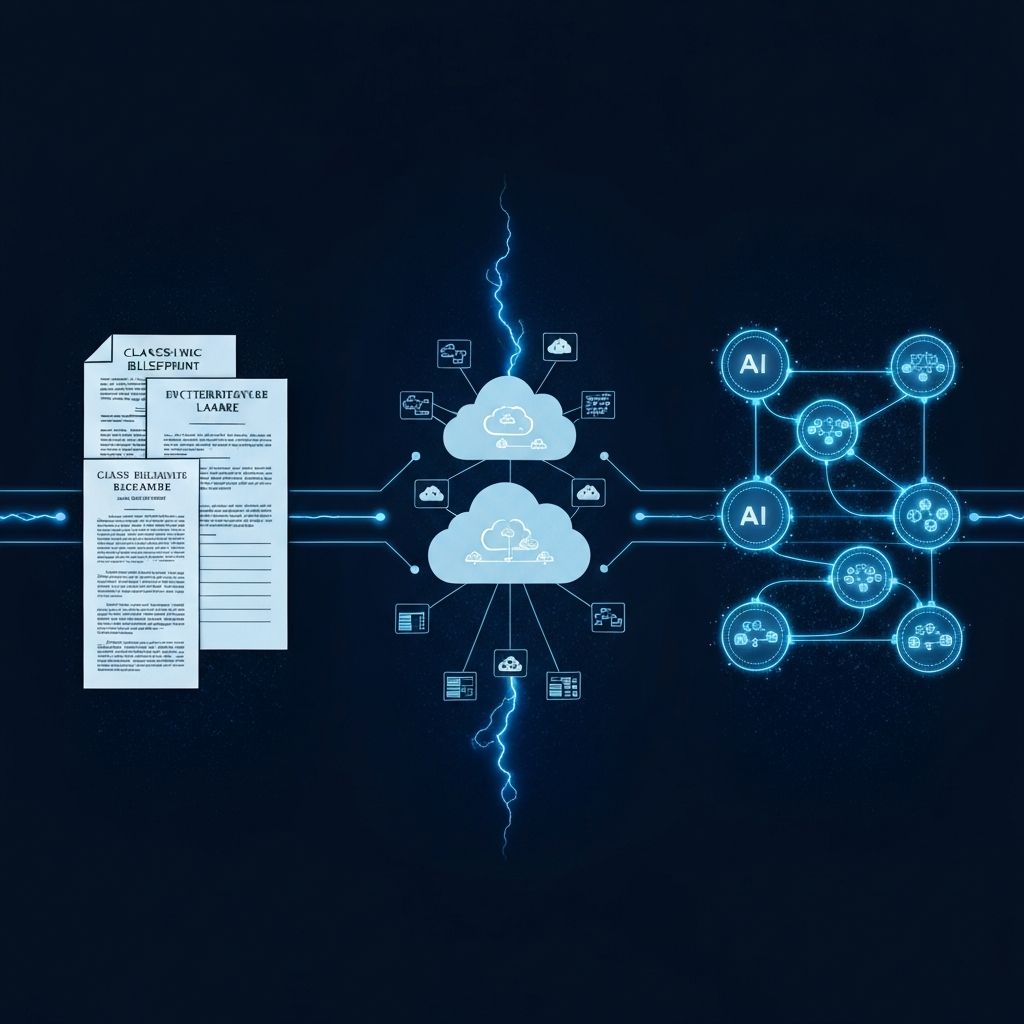
What happens when technology can execute decisions that governance cannot control?
Special analysis: Cybersecurity · Enterprise Architecture · AI Governance · Operational Resilience
The $6.3 billion question nobody in the boardroom can afford to ignore
On October 29, 2026, at approximately 20:05 UTC, Binance suffered a major compromise of its hot-wallet infrastructure. According to the company’s subsequent disclosure, the incident resulted in approximately $6.3 billion in stolen digital assets.
Within the first 24 hours, Binance reported that approximately $3 billion had been frozen on-chain. It committed to covering customers’ losses through its Secure Asset Fund for Users (SAFU) and corporate resources.
The numbers are staggering. But the most consequential question is not how much cryptocurrency was stolen. It is this:
How can an institution possessing sophisticated security infrastructure, operational controls and extensive technical resources still experience unauthorized financial activity at this scale?
The answer cannot responsibly be determined until the forensic investigation is complete. Yet the incident already exposes a much broader problem facing banking, insurance, capital markets, enterprise technology and increasingly autonomous AI systems.
We have spent decades building systems capable of executing transactions faster. Have we built governance capable of controlling their authority?
1. What we actually know after the first 24–48 hours
The first lesson is epistemic discipline: distinguish verified facts from preliminary findings and technical hypotheses. Binance’s October 30 communications establish several important facts.
Confirmed by Binance
- Approximately $6.3 billion in token assets was stolen following the compromise of hot-wallet infrastructure.
- Approximately $3 billion in affected assets had been frozen on-chain.
- Withdrawals were suspended pending additional security verification, while deposits and unaffected services remained operational.
- Compromised infrastructure was contained and affected authorizations were revoked.
- The company committed more than $6.34 billion in corporate resources to covering the incident, including more than $5 billion in corresponding digital assets.
- A full technical investigation and post-incident report remained pending.
Preliminary technical findings
The first investigation pointed toward a compromised DevOps engineer’s laptop and unauthorized access to service infrastructure. However, Binance’s subsequent update explicitly acknowledged the discovery of additional points of compromise. The company also stated that it had found no evidence of leaked wallet private keys at that stage.
This is a crucial distinction. An attacker does not necessarily need to steal a private key to cause a system to produce unauthorized outcomes. Compromised workflows, signing infrastructure, delegation mechanisms, privileged services or approval processes may create alternative paths to abuse.
That observation does not establish which path caused the Binance incident. It tells enterprise architects where to investigate.
Independent technical reporting has also implicated Ethereum’s EIP-7702 delegation mechanism in part of the attack sequence. That mechanism deserves careful examination, without prematurely treating it as the root cause of the entire incident.
2. EIP-7702: when a valid authorization becomes a dangerous capability
Ethereum’s EIP-7702 introduces a mechanism enabling externally owned accounts to delegate execution behavior to smart-contract code. In simplified terms, a wallet can authorize another contract to provide executable behavior on its behalf. This is useful for sophisticated account functionality, including certain forms of batching, sponsorship and account abstraction.
But powerful delegation requires correspondingly powerful governance. The EIP specification identifies significant security considerations, including the consequences of delegating account behavior to unsafe code. Its security discussion makes clear that delegated code may receive extensive authority over an account and that the delegated implementation requires careful review.
Consider a generalized risk scenario. An attacker compromises an operational system with access to an authorization workflow. That workflow produces signatures or delegation approvals that appear cryptographically valid. A malicious contract subsequently obtains authority to execute operations affecting valuable assets. Ordinary downstream checks may observe signatures that are valid while failing to recognize that the underlying business authorization has been compromised.
The cryptographic proof may be valid. The business decision may not be.
Cryptographic validity proves something about the authorization mechanism. It does not, by itself, establish that the action was appropriate, intended, risk-approved or consistent with an organization’s financial policies.
This is not an argument against EIP-7702. It is an argument against treating protocol-level authorization as a substitute for enterprise-level governance.
3. The missing connection: cybersecurity controls and enterprise architecture
Cybersecurity focuses on protecting information, identities, systems, applications and infrastructure. Enterprise architecture connects business capabilities, operating processes, applications, information flows, technology dependencies and organizational responsibilities. Effective resilience requires both.
A mature architecture review should be able to trace a critical financial action through multiple layers:
| Architecture layer | Critical question |
|---|---|
| Business | What legitimate business outcome is this transaction supposed to achieve? |
| Process | Which process authorizes and reconciles it? |
| Identity | Which human, machine or service is requesting execution? |
| Application | Which component initiates, approves and processes the operation? |
| Integration | Which interfaces can propagate or transform authority? |
| Infrastructure | Which workloads, devices and environments can influence execution? |
| Governance | Who owns the authorization policy and its exceptions? |
| Risk | What limits the financial consequence of a compromised component? |
A system may pass technical authentication while still violating business policy. An authorized service account might possess an excessive transaction limit. A privileged automation workflow might combine initiation and execution permissions. A critical API might accept a valid service identity without enforcing independent business approval. A signing infrastructure might validate cryptographic instructions without checking their legitimacy against business context.
None of those conditions has been established as the definitive root cause of the Binance incident. They are examples of architectural failure modes every institution handling financial value should assess.
The objective is not to replace cybersecurity with architecture. It is to make cybersecurity, architecture and business governance operate as one control system.
4. Zero Trust must extend beyond access
NIST SP 800-207 established an influential architectural foundation for Zero Trust. It rejects implicit trust based simply on network location or asset ownership, and its associated cloud-native guidance extends this thinking to application and service identities.
Yet many enterprises still implement Zero Trust primarily as an access-security initiative. Identity verification is necessary. It is not sufficient. A stronger financial-control architecture should evaluate authorization in the context of each consequential action:
- Is the requesting identity currently authorized?
- Is this specific transaction within an approved financial limit?
- Is the destination permitted under policy?
- Does the requested action match an approved business purpose?
- Is an independent approval required?
- Are there unusual patterns of frequency, volume or cumulative exposure?
- Can the authorization be immediately revoked?
- Can the organization stop execution without depending on the potentially compromised component?
The goal is not merely to determine who can access a system. It is to determine what that system may do, under which conditions, with whose approval, and with what maximum financial consequence. That is where enterprise architecture becomes a measurable component of operational resilience.
5. What if the loss had been $25 billion? Or $50 billion?
Consider a hypothetical institutional stress test. Suppose an organization has $50 billion in operationally accessible digital assets. A compromised authorization path permits the movement of assets faster than governance or monitoring mechanisms can intervene. What if the loss did not stop at $6.3 billion? What if it reached $10 billion, $25 billion or $50 billion?
These scenarios are not forecasts or estimates of additional Binance losses. They are deliberately constructed stress conditions.
| Hypothetical gross loss | Institutional stress question |
|---|---|
| $6.3 billion | Can the institution absorb the loss and restore operations? |
| $10 billion | Can treasury, reserves and liquidity plans support recovery? |
| $25 billion | Can the institution withstand prolonged operational disruption and confidence pressures? |
| $50 billion | Could the event create systemic consequences across counterparties and interconnected financial markets? |
The last question is especially important. Financial institutions do not operate in isolation. A sufficiently large disruption could affect liquidity provision, settlement obligations, counterparties, custodians, customers and connected platforms. But such outcomes are conditional. They depend on exposure concentration, recoverability, financial resources, counterparties, market conditions, regulatory intervention and available liquidity.
A gross theft amount is not the same as a final economic loss. Frozen assets are not automatically recovered assets. A commitment to reimburse customers is not equivalent to demonstrating immediate operational liquidity across all scenarios. Responsible board analysis must distinguish these quantities.
An effective architecture should also consider the relationship:
Maximum plausible loss = exposed value × reachable permissions × failure of preventive and containment mechanisms, adjusted for the actual transaction paths, limits and recovery assumptions.
This is a conceptual risk model, not a validated financial formula. Its purpose is to force an architectural discussion about loss containment. If a single compromised workflow can expose a disproportionate share of an institution’s assets, that concentration is itself a governance concern.
The executive question becomes: what is the maximum financial damage our current architecture could permit before an independent control stops execution? Every board overseeing a high-value digital operating environment should require an evidence-based answer.
6. Now introduce autonomous AI agents
The Binance incident is not, on the available evidence, an AI-agent incident. That matters. Nevertheless, its authorization lessons become increasingly relevant as organizations deploy autonomous and semi-autonomous agents with operational permissions. An AI agent may be allowed to:
- Initiate supplier payments.
- Approve transactions within predefined limits.
- Modify customer account information.
- Execute treasury operations.
- Interact with enterprise systems through privileged APIs.
- Trigger procurement activities.
- Change infrastructure configurations.
- Coordinate other agents and automation services.
The risk landscape changes when an agent can not only recommend a financial action but execute it. A compromised service identity represents one attack surface. An AI agent with broad tool access introduces additional dimensions, including malicious tool responses, prompt injection, compromised retrieved content, excessive permissions, unclear delegation chains and insufficient approval boundaries.
Imagine a hypothetical AI treasury agent. It receives a seemingly legitimate instruction through a compromised integration. The instruction is processed successfully. The agent uses authorized enterprise APIs. The transaction is accepted because the agent’s technical credentials remain valid. Yet the action violates the company’s treasury policy.
The issue is not whether the AI model is intelligent. The issue is whether its authority is bounded by controls that remain effective when its instructions, context or surrounding systems are compromised.
This requires a separation between reasoning, recommendation, authorization and execution. A model should not be the sole authority deciding whether its own high-impact action is permissible. Independent policy enforcement, transaction limits, human escalation and tamper-resistant evidence become critical.
7. AI governance is not a policy document
NIST’s AI Risk Management Framework organizes AI risk activity through four connected functions: Govern, Map, Measure, Manage. ISO/IEC 42001:2023 establishes requirements for an organizational AI management system, including processes for risk management, accountability and continuous improvement. ISO/IEC 38507:2022 addresses the governance implications of AI for organizational governing bodies.
These frameworks provide valuable structures. But standards do not eliminate risk merely because their terminology appears in a corporate presentation. Governance must translate into executable controls. For high-impact AI systems, that means clear accountability and evidence for:
1. Authority boundaries
What actions can an agent perform independently? Which actions are prohibited? Which require a second authority?
2. Context integrity
Which information sources can influence the agent’s actions? How are untrusted inputs distinguished from approved instructions?
3. Independent enforcement
Are transaction limits and access policies enforced outside the model’s own reasoning process?
4. Human accountability
Who is responsible when an agent executes a technically authorized but economically unacceptable decision?
5. Traceability
Can investigators reconstruct the instruction, identity, context, policy decision, tool invocation and final outcome?
6. Intervention
Can the organization suspend an agent, revoke permissions, isolate an integration and halt pending actions without relying on the compromised workflow?
7. Continuous validation
Are controls challenged through realistic simulations, adversarial testing and operational exercises?
Compliance documentation provides important evidence of management intent. Operational evidence demonstrates whether the system actually enforces that intent.
AI governance that cannot constrain an AI system’s authority is governance in name only.
8. The architecture of controlled execution
For institutions operating autonomous systems and high-value transaction infrastructures, we propose a practical architectural model built around six complementary layers.
Layer 1: Enterprise Context
Map critical business capabilities, applications, financial processes, dependencies, identities, data assets and responsible decision-makers.
Layer 2: Identity and Delegation
Define service identities, machine credentials, signing permissions, delegated authority, credential lifecycle and effective access rights.
Layer 3: Business Policy Enforcement
Enforce transaction ceilings, permitted destinations, segregation of duties, business-purpose validation and approval thresholds outside untrusted execution components.
Layer 4: Execution Monitoring
Correlate identity, transaction, behavioral and infrastructure signals to identify anomalous execution patterns.
Layer 5: Resilience and Containment
Implement independent stopping mechanisms, exposure segmentation, revocation procedures, recovery capabilities and tested crisis playbooks.
Layer 6: Evidence and Accountability
Preserve the records necessary for operational investigations, governance review and executive decision-making.
These layers must be connected. A transaction-monitoring dashboard cannot compensate for an authorization model with excessive permissions. A sophisticated risk policy is ineffective if it is not enforced. A highly detailed enterprise architecture repository creates limited protection if its dependencies and critical failure paths are never tested. And an AI governance committee cannot responsibly approve autonomous execution without understanding how an agent’s authority translates into real-world consequences.
9. Seven questions the board should ask on Monday
The immediate lesson for directors and senior executives is not to demand another generic cybersecurity presentation. It is to request evidence of operational control.
- Maximum loss exposure: What is the maximum value a single compromised identity, service or agent could move or affect before independent intervention?
- Authorization independence: Which controls remain effective when primary execution infrastructure is compromised?
- Enterprise dependencies: Do we understand how critical infrastructure, business applications, APIs and financial processes depend on each other?
- Privileged execution: Which identities and AI agents have permissions capable of producing material financial consequences?
- Time to containment: How quickly can the enterprise detect, suspend and contain unauthorized execution?
- Evidence quality: Can we reconstruct a high-impact transaction across identity, policy, application, infrastructure and business ownership?
- Crisis readiness: Have executive teams practiced a scenario in which trusted technology executes an unauthorized business decision?
If these questions cannot be answered with current evidence, the board has an unresolved governance visibility problem.
10. The real lesson of Binance may be bigger than cryptocurrency
It would be premature to declare the exact architectural failures responsible for the Binance attack. The final post-mortem may identify a more complex sequence of vulnerabilities, authorization weaknesses, operational compromises and missed opportunities for intervention.
But the wider architectural challenge is already clear. Digital systems are receiving increasing authority. Applications execute transactions. Services delegate permissions. Smart contracts enforce financial instructions. AI agents coordinate decisions across business functions.
The cost of a compromised identity or workflow depends not only on the quality of the attacker. It depends on what the architecture permits that identity or workflow to do.
The defining question of enterprise resilience is shifting from “Can someone get in?” to “What can happen after something trusted is compromised?”
The future of governance is not simply more policies. It is an architecture in which operational authority, business context, independent controls, monitoring and executive accountability function together. And as AI becomes an execution layer for the enterprise, that architecture becomes even more important.
The next catastrophic loss may not be caused by an obviously unauthorized system.
It may be caused by an authorized system executing a decision that should never have been allowed.
Executive call to action: can your architecture prove its readiness?
At ARCHAI WORLD, we bring together enterprise architecture, AI governance, operational resilience, enterprise context and executive decision-making to help organizations examine the risks that emerge between systems, permissions and business outcomes.
Our approach connects architectural analysis with practical decision exercises, including enterprise-context mapping and AI-assisted risk scenarios. For CIOs, CISOs, Chief AI Officers, Chief Risk Officers, Enterprise Architects and Boards of Directors, the first step is understanding where authority, dependencies and operational exposure intersect.
Start with the complimentary ASTRA Enterprise Readiness Assessment:
Take the ASTRA Readiness Assessment
archaiworld.com/astra-readiness
The question is no longer whether your organization has security controls.
The question is whether your architecture can prove that those controls will prevent a technically valid action from becoming a catastrophic business decision.
Leonardo Ramírez
Enterprise Architect | AI Governance & Enterprise Transformation Strategist
ARCHAI WORLD | AI Governance Today
Editorial sources and technical references
- Binance. Security Incident Update, October 30, 2026. binance.com
- Binance. Security Incident Update #2, October 30, 2026. binance.com
- CoinDesk. Binance discovers multiple breach points in $6.3 billion attack, October 30, 2026. coindesk.com
- CoinDesk. Here’s how an Ethereum upgrade helped drain part of Binance’s $6 billion loss, October 30, 2026. coindesk.com
- Ethereum Improvement Proposals. EIP-7702: Set Code for EOAs. eips.ethereum.org
- NIST. SP 800-207: Zero Trust Architecture. nist.gov
- NIST. AI Risk Management Framework. airc.nist.gov
- ISO. ISO/IEC 42001:2023, Artificial Intelligence Management Systems. iso.org
- ISO. ISO/IEC 38507:2022, Governance Implications of AI. iso.org
Editorial disclosure: This analysis relies on public information available as of October 31, 2026. The full forensic investigation has not been published. The architectural scenarios and larger-loss stress tests are hypothetical and must not be interpreted as verified findings about Binance’s internal systems or as forecasts of additional losses. The incident itself has not been established to involve autonomous AI agents.